
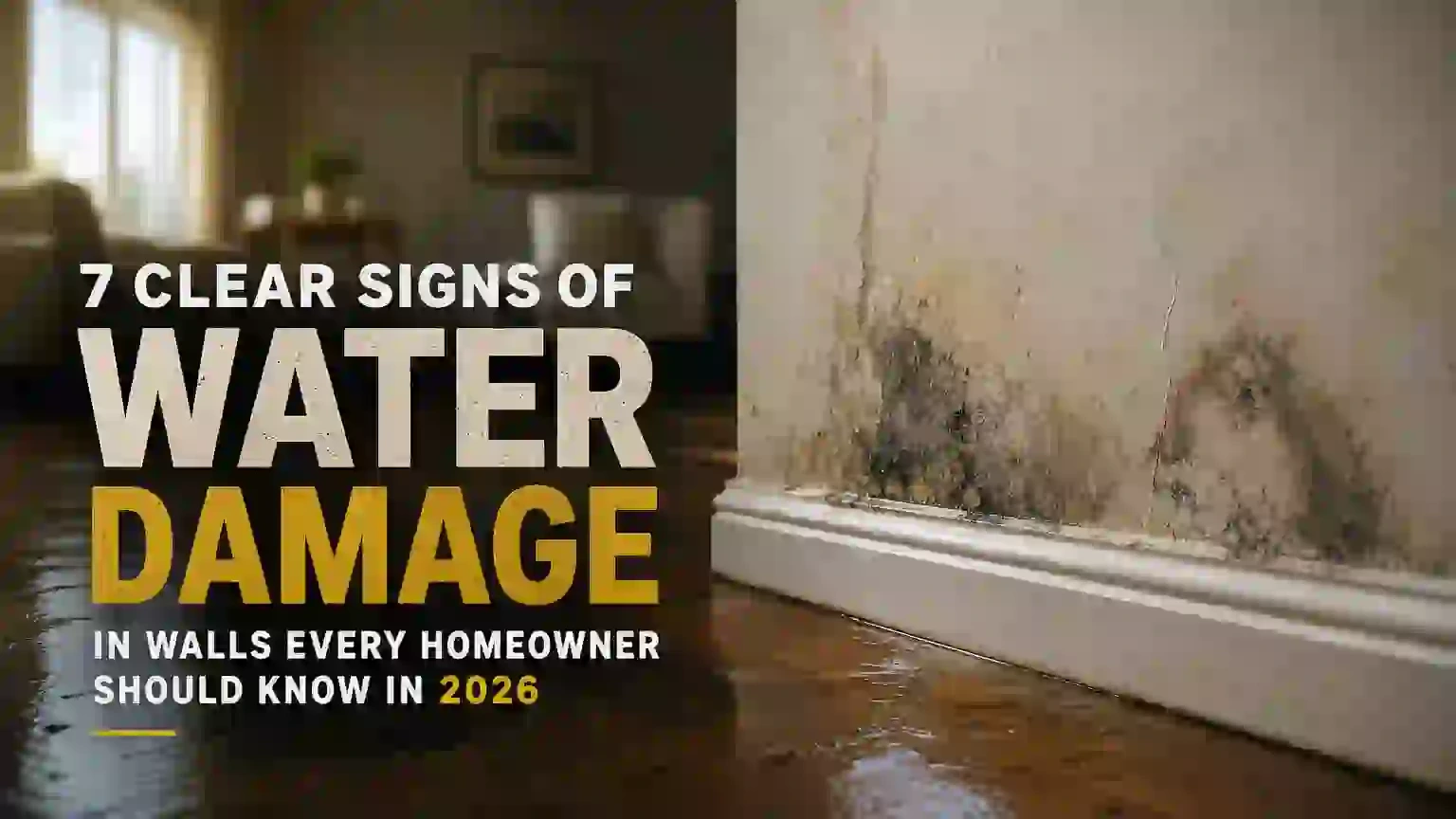
7 Clear Signs of Water Damage in Walls Every Homeowner Should Know in 2026
You noticed a faint stain near the baseboard. Maybe a slight musty smell you keep blaming on the dog. Then one morning the drywall feels soft when you press it. That moment of dread is familiar to a lot of homeowners, and it usually means the wall has been hiding a problem for weeks or months.
Catching the signs of water damage in walls early can save you thousands. Repairs caught at the staining stage typically run $200-$500. Wait until mold spreads or framing rots, and that number jumps past $5,000 fast.
What You’ll Need Before You Start Inspecting
You do not need a contractor’s toolkit for this. A basic inspection requires a few inexpensive items you likely already own.
- Flashlight (a bright LED like a Streamlight Stylus Pro works well)
- Flathead screwdriver for gentle probing
- Moisture meter (models like the General Tools MMD4E run about $15-$25)
- Painter’s tape for marking suspect spots
- Notepad or phone camera for documentation
A moisture meter is the one item worth buying if you don’t have it. Readings above 16% moisture content in drywall signal active dampness that needs attention.
1. Discoloration and Staining on the Wall Surface
The most visible sign is also the easiest to dismiss. Yellow, brown, or rust-colored stains on paint or drywall almost always trace back to water intrusion. Fresh stains look darker and feel slightly damp. Older stains dry to a faint ring shape, like a coffee cup mark, because minerals in the water deposit at the edge as it evaporates.
Check near windows, along exterior walls, and at the ceiling-to-wall junction. Those three zones account for the majority of staining cases I’ve seen. A stain that keeps coming back after you paint over it is a near-certain sign the source is still active.
2. Paint or Wallpaper That’s Bubbling or Peeling
Moisture trapped behind a wall surface pushes outward. When it hits paint, it breaks the bond between the paint film and the drywall, creating bubbles, blisters, or flaking patches. Wallpaper reacts the same way, lifting at seams or developing soft, spongy sections.
Run your hand across the wall. Bubbles that feel wet or collapse when pressed mean water is still present. Dry, papery bubbles usually indicate a past leak that may have resolved. Either way, the underlying drywall needs inspection before you repaint. Skipping that step is one of the most common mistakes homeowners make.
3. Soft, Spongy, or Warped Drywall
Healthy drywall is firm. Press on a suspect area with your thumb. If it gives, crumbles slightly, or feels spongy, the gypsum core has absorbed moisture and begun to break down. At that point the drywall is structurally compromised and will need replacement, not just drying out.
Use your flathead screwdriver to probe gently at the baseboard level, where water tends to pool. Soft spots within 6 inches of the floor often indicate a plumbing leak inside the wall or water wicking up from a wet subfloor. Warping, where the wall surface bows outward or inward, tells a similar story and is hard to miss once you’re looking for it.
4. Musty Odor and Visible Mold Growth
Smell is an underrated diagnostic tool. A persistent musty or earthy odor in a room, especially one that gets stronger when the HVAC runs, often means mold is growing inside a wall cavity. Mold can begin colonizing damp drywall in as little as 24-48 hours under warm conditions.
Visible mold shows up as black, green, gray, or white fuzzy patches. It often appears first at corners, behind furniture pushed against exterior walls, or along baseboards. If you spot mold covering more than 10 square feet, the EPA recommends professional remediation rather than a DIY cleanup. Smaller patches can be treated with a diluted bleach solution, but address the moisture source first or the mold returns within weeks.
5. Efflorescence on Basement or Concrete Walls
This one surprises homeowners who haven’t seen it before. Efflorescence is a white, chalky, or crystalline deposit that forms on concrete, brick, or cinder block walls. It looks almost decorative. It is not.
Water moves through masonry, dissolves mineral salts inside, and carries them to the surface. When the water evaporates, the salts remain as that white crust. Efflorescence itself is not mold and is not toxic, but it is a reliable indicator that water is actively migrating through your foundation or basement wall. Left unchecked, that continuous moisture leads to spalling concrete, rusted rebar, and eventually structural damage. A stiff brush removes the deposits temporarily, but waterproofing the wall from the interior with a product like DRYLOK Masonry Waterproofer is the longer-term fix.
6. Warped or Buckled Baseboards and Trim
Wood trim absorbs moisture faster than drywall does. Baseboards that are pulling away from the wall, swelling at joints, or showing a wavy profile along the bottom edge are telling you water is sitting at floor level. This pattern often traces back to a slow plumbing leak, a failing toilet wax ring, or water seeping under an exterior door.
Tap along the baseboard with your knuckle. A hollow sound suggests the drywall behind it has separated from the framing due to moisture swelling. Solid contact sounds normal. That simple knock test takes about 30 seconds per wall and can pinpoint problem zones before any cutting or probing.
7. Spike Readings on a Moisture Meter
Visual inspection only catches what has already progressed far enough to show. A moisture meter finds problems before they become visible. Press the pins of a meter like the General Tools MMD4E against the drywall surface at 12-inch intervals across a suspect area. Normal drywall reads between 5-12%. Anything above 16% warrants investigation. Readings above 25% mean the material is saturated and almost certainly needs replacement.
Document your readings with painter’s tape and a marker directly on the wall, or photograph them. This creates a map of the moisture pattern, which helps a plumber or contractor identify the source faster and saves you labor costs on diagnosis.
> Pro tip: Test at multiple heights on the same wall. Moisture patterns reveal the leak’s origin point. High readings near the ceiling suggest a roof or upstairs plumbing issue. High readings near the floor point to ground-level intrusion or a slab leak.
Common Mistakes Homeowners Make When Checking for Wall Damage
Knowing what to look for matters. Knowing what not to do matters just as much.
- Painting over stains without testing moisture first. The stain comes back within weeks, and now you’ve added a layer of paint that traps moisture further.
- Ignoring a musty smell because you can’t see anything. Mold inside a wall cavity can reach significant coverage before breaking through the surface.
- Probing too aggressively with a screwdriver. You can puncture a pipe or wiring. Gentle pressure only.
- Assuming the damage is dry because the stain looks old. Old stains can still have active moisture behind them. Always confirm with a meter.
- Fixing only the symptom. Replacing drywall without fixing the leak source means you’ll be doing it again in 6-12 months.
How to Act on What You Find in Your Walls
Finding these signs is the productive part. Most homeowners feel relieved once they know what they’re dealing with, even when the news is not great. A small stain with a moisture reading under 16% and no mold is a manageable weekend repair. Dry the area with a dehumidifier for 48-72 hours, confirm the source is fixed, and patch the drywall.
Anything involving mold coverage over 10 square feet, readings above 25%, soft framing lumber behind the drywall, or efflorescence across a large basement wall section deserves a professional assessment. Get at least two quotes. Remediation costs vary widely, typically $500-$3,500 depending on scope, and a second opinion often reveals whether the high-end quote is justified.
The seven warning signs covered here give you a solid framework for a thorough walk-through of your home. Catching water intrusion at the staining or bubbling stage, before structural damage sets in, is one of the highest-value inspections you can do as a homeowner in 2026.
Frequently asked questions
How quickly does water damage show up in walls?
Visible signs like staining and paint bubbling can appear within 1-2 weeks of a slow leak. Fast leaks, such as a burst pipe, can cause soft drywall and mold growth in as little as 24-72 hours. The speed depends on how much water is involved and how well-ventilated the wall cavity is.
Can I repair water-damaged drywall myself?
Yes, for contained damage under about 4 square feet with no mold and confirmed dry conditions. Cut out the damaged section, let the framing dry completely (typically 48-72 hours with a dehumidifier), then patch with new drywall and joint compound. If mold is present or the framing lumber feels soft, call a professional.
How do I find where the water is coming from?
Start by mapping your moisture meter readings. High readings near the ceiling point to a roof leak or upstairs plumbing. High readings near the floor suggest ground-level intrusion, a slab issue, or a failing wax ring. Staining that follows a vertical line often traces to a pipe inside the wall.
Does homeowners insurance cover water damage in walls?
It depends on the cause. Sudden and accidental damage, like a burst pipe, is typically covered. Gradual leaks or maintenance-related issues are usually excluded. Document everything with photos and your moisture readings before making repairs, and contact your insurer before opening the wall.
Is efflorescence dangerous to my family’s health?
Efflorescence itself is not toxic. It is mineral salt, not mold. However, the moisture causing it can eventually lead to mold growth in adjacent materials. Address the water intrusion behind it, and the efflorescence stops recurring.
